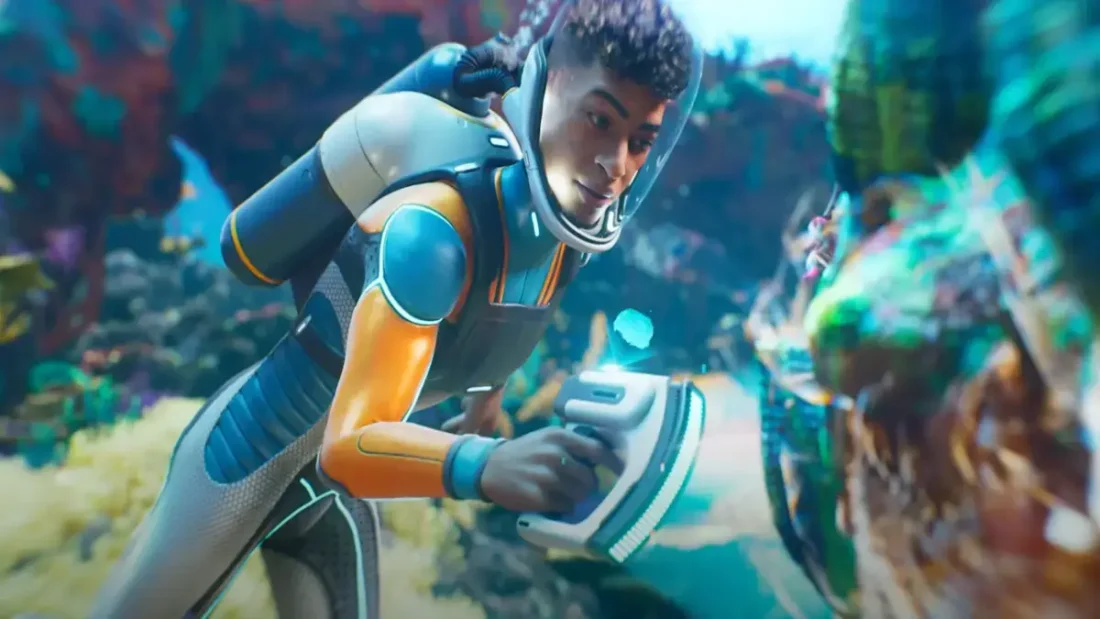
The purchase of Unknown Worlds by Krafton in 2021 was originally presented as a partnership to gain the financial groundwork required to allow the Subnautica franchise to satisfy its full technical potential. However, recent accounts of growing legal friction over the sequel’s Early Access release underline a growing divide between the agility and community-oriented development, on the one hand, and the quarterly and prescriptivist demands of a global publishing giant, on the other. This latest “beef” is not just an argument over a calendar date, it’s a fundamental battle of purely technical and monetization structure of what promises to be one of the most anticipated survival games in the industry.
Also read:The Invisible Powerhouse: Why VLC is the Only Network Media Hub You Actually Need
At the center of the conflict is wide-ranging misalignment between how Subnautica 2 is being situated with Krafton’s overall financial interests versus the reality of the development of Subnautica 2 at Unknown Worlds. When Krafton’s financial reports previously described the sequel as a title from “Games as a Service” (GaaS), the developer was quick to explain that the game would be a narrative-driven survival experience first and foremost. Yet, the underlying pressure to conform to a live service model remains, alternately, and most likely driven by Krafton’s desire to generate recurring revenue streams like it has with its flagship title, PUBG. For a studio that has built its brand off on the atmosphere and solitude of an alien ocean, the shift to a model that requires constant content relay and multiplayer architecture brings along huge technical overhead that is often at odds with creative freedom.
Also read:Optimizing Digital Redundancy: Why FreeFileSync Remains a Power User Essential
This technical overhead is complicated by the fact that the world is shifting to Unreal Engine 5. Moving away from the Unity (the proprietary and modified Unity from the prior games) allows for unparalleled visual fidelity as well as complicated physics simulations but also extends development timelines. In the eyes of a publisher, any extra month that a development cycle lasts is a liability that has to be offset by some earlier revenue-generating event, such as an Early Access release. The legal friction of the moment hints that Krafton is pressing for a particular release time to meet up with the expectation of investors, but Unknown Worlds is likely pushing back to make sure that the build lives up to the high stability requirements that such a successful Unreal Engine 5 deployment would require.
Also read:Microsoft Refines Windows 11 With Long-Awaited UI Fixes
The concept of Early Access has evolved from a grassroots feedback mechanism to being a critical tool for large publishers as it is a financial instrument. For Unknown Worlds, Community Driven Iteration – This was the Early Access phase for original Subnautica, where the mechanics of the game were hardened on the fires of player feedback over a period of several years. Krafton however, is on a different order of magnitude where “Early Access” is frequently considered a soft launch to start the marketing lifecycle. When such a conflict arises between developer and publisher with the “readiness” of any Early Access build, the conflict usually revolves around the definition of a Minimum Viable Product. For the developer it means zero bugs and retaining the integrity/brand is built on; for the publisher it could often mean having a ‘playable’, decent state that can start recouping development costs.
Also read:Why This New WebKit Browser is the Holy Grail for Power Users and Privacy Seekers
Furthermore, the legal complexities of publishing contracts often contain provisions in relation to “commercial release windows” and “marketing control” which can become an area of potential failure when the scope of a project expands. Subnautica 2’s co-op component, one of the first games in the series to feature a four-player mode, introduces a whole new level of networking complexity that awarded studio never has had to handle on this scale. Implementing strong synchronization between servers, and physically latent interactions in multiplayer environment, is one famous development bottleneck. If the contractual mandates of Krafton are forcing a 2025 consideration despite these technical hurdles, the “legal beef” is likely a defensive move by Unknown Worlds to keep the project from being rushed into a state that would hurt the long-term viability of the franchise.
Also read:Your Eyes Are Lying To You And This Viral Web Game Proves It
This situation can be taken as a cautionary tale for the industry with regards to the “corporate-indie” hybrid model. While Krafton has the backing and resources to create a triple-A survival game there is an institutional focus on live service metrics and aggressive release schedules that creates an environment of perpetual friction. The technical needs of creating modern games, especially when engine changes and additional major functionality such as co-op are needed, simply don’t get that kind of flexibility in a traditional publishing contract. If the legal battle begins to escalate, not only could the game be delayed but the whole relationship between the creators and the corporate entity that now owns their IP could be fundamentally changed.
Ultimately the resolution of this conflict will determine the quality of the end product which reaches the consumer. A rushed launch due to legal needs instead of technical needs for Early Access often leads to a “mostly negative” rating on Steam that can be hard to recover from. Unknown Worlds knows that in the survival genre, first impressions are all that matter. Whether they can keep their creative and technical standards against the gravitational pull of Krafton’s corporate mandates is consequently the most important question to fans of the series. The outcome will be a signifier whether Subnautica 2 can continue being a labor of love or if it’s ground up to be another link in a global live service machine.
Disclaimer: The information provided in this article has been collected from publicly available sources on the Internet. Readers are requested to verify this information with available sources.