Every committed PC-lover begins to come to a cross-Pacifica where he or she must admit a harsh truth: the respectable rig that has been an associate ally for years just isn’t quite adequate any extra. Most of us would rather live with a conservative philosophy of upgrading since holding onto what we have would make us part of the members of hardware and software who make ‘the thing’ live on longer, and the lag becomes not only literally painful, but physically too. However, history would testify to the fact that sometimes, a game comes along that is so revolutionary, so graphically arresting and so technically challenging that it breaks our will to wait. These are the titles that were not games, but technological statements that put our hardware in early retirement. They were the areas where creative ambition was ahead of current silicon, and our systems would choke for breath but the developers were calling us a high fidelity future.

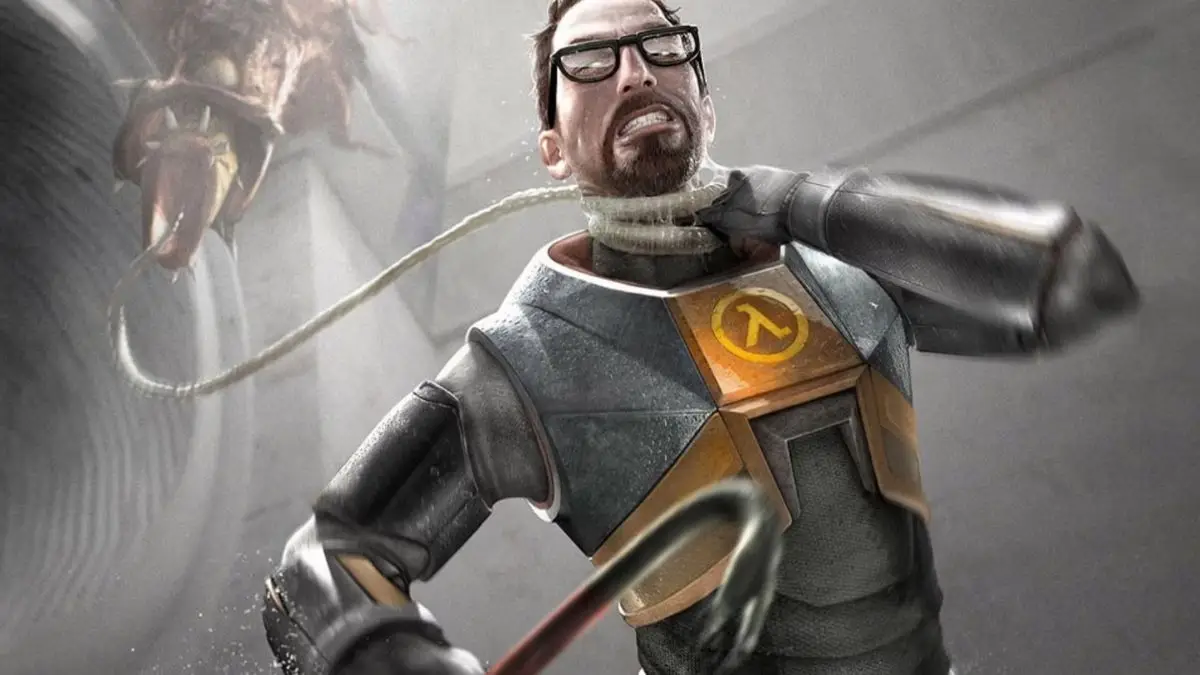
Looking back to 2004 the landscape of PC gaming was dominated by the aging Pentium 4 processors as well as first generation GPU contestants from the GeForce FX or Radeon series. Then, Half-Life 2 came along and radically changed what we expected from the worlds of technology. While many games at the time were just beginning to dabble with sharper textures in comics, Valve creates something much more profound with the introduction of their Source Engine; the introduction of a world that sounded like a world. It brought with it real-time physics, fantastic facial animations that were incredibly expressive and environments that felt like they reacted rather than just sitting static. The introduction of the Gravity Gun was like the transmission of a decade into the future, where every crate and saw blade that was used as a background prop suddenly became a possible weapon or solution to a puzzle. While the game technically scaled-down to humble hardware, the look of seeing City 17 in all its glory in high resolutions was a siren call for an upgrade. Suddenly, GeForce 6600s and Radeon X800s are the hottest items on the block as players were scrambling to have water that looked like water come to life and faces that were actually emulating human emotion.

Trends of the hardware-crushing software continued however, sometimes where we wouldn’t expect the bottleneck to be. In 2008, Grand Theft Auto IV returned to Liberty City in all its long overdue glory, but it brought his one of the most notoriously demanding PC ports of all time. By this time, dual-core CPUs and graphics cards such as the legendary GeForce 8800 GT were good on many gamers. However, Rockstar Games created a simulation so thick that it was essentially throwing the old formula out of the window for GPU first upgrades. This version of Liberty City leaned with staggering weight on the CPU to account for its complicated traffic systems, pedestrian AI and massive draw distances. It was a brutal wake-up call to those people out there that were still trying to cling to dual core architecture. For the first time in a long while, gamers were scrambling out to buy quad-core processors just to have a stable frame rate. GTA IV wasn’t just about the “eye candy” in a traditional sense; it was about the sheer computational cost of a living and breathing metropolis and it taught an entire generation of gamers that a powerful graphics card is useless if the processor can’t cope with the world around it.

Of course no conversation on hardware heavy games can exist without a mention of the ultimate legend – Crysis. Released back in 2007 by Crytek, this game used the brand new CryEngine 2 to deliver something that was a visual stupundity and could change the limitations of PC gaming. The Lingshan Islands had destructible foliage, advanced volumetric lighting and draw distances which made every other game look like a bunch of cardboard boxes. It was a beast that didn’t care for your “high-end” rig, it didn’t care if you had the most expensive GeForce 8800 ultra cards, due to lack of playable FPS, the game didn’t work at “Very High” settings. “Can it run Crysis?” became the best-known meme in the industry and an unofficial standard for many years to come. It was not only a game, it was a target. Manufacturers used it for demonstrations of new technology products, and reviewers used it to force the hardware to its breaking point. While there were some that said it could have been better optimized, that was never the point. Crysis was intended to be a look at the future of gaming and it successfully whipped a wave of global upgrades as gamers competed to make every leaf in the jungle breeze.

As we spot a mid-2010s deal on the horizon, a new version of this leap got thrown at us – The Witcher 3: Wild Hunt, aka the ‘next-gen’ leap. As of 2015 the midrange market was dominated by cards such as the GTX 970 which were perfectly fine up until they encountered the sprawling world of The Continent. CD Projekt Red brought to the table an open world RPG that resembled much more the prestige television production than a video game. With technologies such as Nvidia HairWorks, dense volumetric fog, and huge dense cities such as Novigrad, the game had even powerful builds breaking a sweat. It was a lesson inRPGs not having to compromise on visual fidelity as an exchange for scale. Players found themselves once again upgrading, not only for the base game, but to work with the enormous size of the texture mods and reshades that managed to switch the graphics even further as time went on. The Witcher 3 set the new standard for immersion in an atmosphere and, for many, was the main reason to move finally away from the clunky 700 series cards into the modern-day world of high definition gaming.


Most recently the hardware world was rocked by the arrival of Cyberpunk 2077. After a near decade-old wait since it was first announced, the game came out in the middle of an era of massive transition for PC tech. This was the period in time when real-time ray tracing was transformed from a “maybe someday” technology to a “must-have” feature. Nvidia’s RTX 20 and 30-series cards were widely advertised with the neon-soaked streets of Night City being promoted on them. When it finally got out to consumers, it was apparent that if you wanted to see the actual city reflecting off rain-drenched pavement and hard neon, and shadows stretching out in every alleyway, then it was mandatory to have an RTX upgrade. Even though things were rocky for a lot of people in terms of the launch, Cyberpunk 2077 still pushed DLSS and Frame Generation into the mainstream jargon. It is still considered the gold standard of visual benchmarks today, which uses cutting-edge Path Tracing to keep itself ahead of the curve. For many, including those who had moved to consoles, the temptations of Night City turned up to max was the motivation to get back into the PC fold, stalking the used card or pre-built rig just to play the city the most technically ambitious one ever made.
Ultimately, there is a common thread that runs through these games and their technical ambition that go beyond the stake of the time. They came on the attention of us at the moments when our hardware prepared almost, but “almost” simply wasn’t enough to grasp the vision of developers. They served to provoke disputes, to compel awkward purchases with your money, and to fully transform our expectations as to what a pc can manage. Looking back at it, these forced upgrades are an important component of the magic of the hobby. PC gaming has always been a quest for that next great leap and that involves the ritual of swapping parts and squeezing the last frame from our silicon. These games were the escorts which brought us about the next generation, sometimes gently and sometimes at the point of the sword, but always towards a more beautiful digital horizon.
Disclaimer: The information given in this article has been gathered from the public domain on the Internet. It is requested by the readership to confirm this information with available ones.