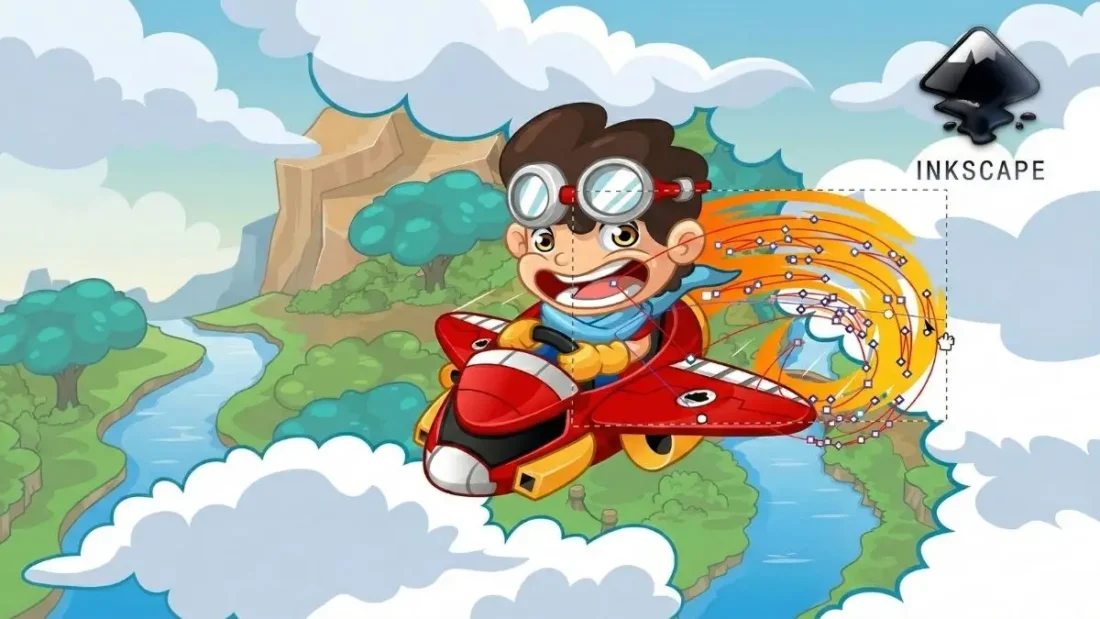
The world of digital design has way too often been a gated community. Many designers spend large monthly fees for high services which become a burden on their budgets. A major change is on the way: With software you don’t have to spend fortunes for professional results anymore. Inkscape is a member of the open source community, having been for a number of years, and it provides an extremely powerful vector drawing environment with many features that is considered to be a number of leagues above its competitors. Whether you are the logo maker in the making, technical illustrator or hobbyist, Inkscape provides you with a rich yet easy-to-use toolkit. It is focused on Scalable Vector Graphic (SVG), the web’s gold standard in high quality print. Unlike raster programs, which get pixelated when zoomed in, vector is display graphic at any scale. That advantage makes Inkscape an icon design, banners and more must-have tool.
The first thing that is noticeable, is the attention paid to user experience. Open source software used to be considered as clunky software, but that’s long past. The interface is clean and modern and snappy even on older hardware. Most all of the elements in a workspace are customizable to work for your workflow. This flexibility is the breath of fresh air for the user, who felt locked in a traditional environment. One of the most powerful capabilities of the software program Inkscape is node editing. In Vector design, nodes are a piece of DNA of shapes. The node tool allows for putting, dragging, and perfecting paths that then makes the idea of doing complex shapes with that tool easy rather than a hassle. Tablet users have the advantages of pressure sensitive pen support, which has some advantages compared with the old mouse tools, as the digital strokes return to natural feeling.
Text handling is another where Inkscape scores very highly against other open source options. The program thinks of text as a living thing and not having to do with a static block of information. You can flow text into shapes or wrap it around some complicated path-and control the spacing and kerning of the fonts with a precision that is only available in a few packages such as Adobe. This makes Inkscape powerful when used for branding projects that contain typography combined with imagery. Its famous “Trace Bitmap” feature turns low-res now raster logos into nice looking vectors in seconds. Clients often send tiny, fuzzy logos which cannot be used at print size – Inkscape’s tool converts them automatically – headaches saved.
Because Inkscape is open — source, it never stagnates. Adapted project The projects evolves continuously with the help of a set of passionate developers around the world who keeps the tools free for everybody. This community approach has created an enormous library of plugins & extensions which you can download. If you need niche functionality, such as some special information creator pattern or web export tool, you will probably find one free in the repository. New features are designed according to user needs and not corporate subscriptions. Inkscape also runs on the Linux, the Mac and the Windows platforms, so you get the same powerful experience regardless of which platform you are using. Compared with heavier competitors it is light and performs well even on modest PCs, making it suitable for students or anybody with an old laptop who demands professional quality despite budget.
Another of its strengths is file compatibility. Inkscape’s many possible imports and exports include PDF, EPS, and AI. You don’t have encounters with files, which won’t open anymore. While there is still a learning curve – like with any other professional tool – there are many free comparisons to video tutorials on YouTube and forums for designers that help you get on board pretty quickly. Within days most people paying for a subscription are asking themselves why they ever did. The benefits extend beyond cost savings, however, from creative freedom. In a world that is becoming dominated by the subscription model Inkscape reminds us that great quality professional software can and should be free. It’s an important tool in the hands of digital artists but also a beacon for what’s possible for the open source community to build a great tool for the right reason.
Disclaimer: The information provided in this article has been collected from publicly available sources on the Internet. Readers are requested to verify this information with available sources.