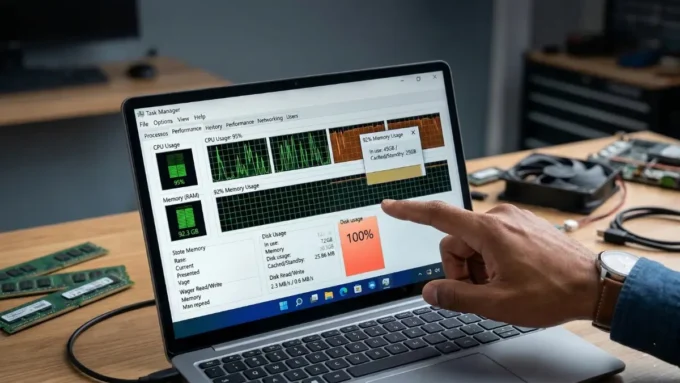


Midway through a heated game, does your screen sometimes freeze for just a moment? A brief pause, almost unnoticeable – yet enough to throw things off. Clicking around the Start Menu feels heavier than it should. Apps take a breath before opening, even though your machine has strong parts inside. Annoying, yes – but common, even on powerful setups. Windows stutters for countless reasons, true. Yet one key cause hides quietly in plain sight: where you adjust power options. Those settings may be holding back your CPU and GPU without warning. Loosen their grip. Let everything run as intended.
Lately, green computing got big. Tech players everywhere now chase that label, Microsoft included. Think carbon-smart Windows updates or low-energy Xbox features. Saving Earth sounds good – sure. Yet what happens on your PC might feel less helpful. If dimmed screens, delayed apps, or frozen tasks pile up, convenience slips away. That moment? Helpfulness turns into hassle.
Lots of people stick with the standard “Balanced” power setting. It seems ideal at first glance – delivers speed when required, cuts back during idle times. Yet lately, Windows 11 has shifted how that mode behaves. What was once a middle ground now leans hard into saving battery. Instead of balancing, it rushes to dim performance. Cores get locked away without warning. Devices hibernate almost instantly if they sense stillness.
A huge issue shows up when handling tasks right away. Tasks needing quick reactions – video games, sound editing, fast data transfers – run into lag from the machine itself. Once the processor lowers power and shuts down parts to conserve energy, waking them again takes real time. Those small gaps appear as hiccups during gameplay, strange noises in speakers, or a wireless mouse cutting out briefly. That moment when your computer seems to stumble? This delay probably caused it.
Want your PC running fast once more? Time to explore what hides in the deeper settings. Here’s a heads-up for those on laptops: only apply tweaks when “Plugged In.” Otherwise, you might empty the battery before finishing your drink downtown. Once connected to power, though, letting Windows restrict performance makes little sense.
Begin by pressing the Start button, then type “Edit Power Plan.” When the screen appears, select “Change advanced power settings.” That’s when things start shifting. Look next for “Processor power management.” Move down to “Minimum processor state,” checking the number under “Plugged in.” Most times it reads just 5%. Bump it up – try 10%, maybe 15%. When this floor goes up, the CPU won’t drop into a deep low-power mode that takes time to escape. That slight boost in idle means it leaps forward right when called.
Here’s another thing worth checking – your GPU and storage setup. Head into the PCI Express menu, find Link State Power Management. Usually it comes turned on to conserve energy, yet that sometimes interrupts data flow from motherboard to graphics card or SSD. Set the plugged in option to disabled instead. Not a boost to peak FPS, true, but expect fewer hiccups during gameplay, with frames arriving much more steadily.
Fixing your extras matters too. Though Windows tries to conserve energy by sleeping USB ports, that often slows down keyboards, mice, or outside DACs. Look inside “USB settings,” tap on “USB selective suspend setting,” then pick “Disabled.” At the same time, jump to “Wireless Adapter Settings” so the “Power Saving Mode” shows “Maximum Performance.” That stops Wi-Fi from dozing off when loading pages or grabbing files.
Some folks overlook what happens behind the scenes. Turning off power-saving modes means the machine pulls more juice from the outlet. Heat levels may creep up when sitting still, so fan noise could rise a touch during quiet moments. Still, many who push their systems hard find that small cost acceptable. A strong PC was meant to perform, not slow down on its own to save a trickle of power.
When your computer seems slow to respond, tiny changes may be just what it needs. Instead of waiting on the system, shift power back where it belongs – straight into your hands. Though Windows works well out of the box, it often holds onto resources longer than necessary. Rather than favoring efficiency modes, push it to react faster the moment you click or type. Try adjusting how tasks are managed, then notice how quickly things open now. What felt outdated yesterday could suddenly keep up without extra effort.
Disclaimer: The information provided in this article has been collected from publicly available sources on the Internet. Readers are requested to verify this information with available sources.