

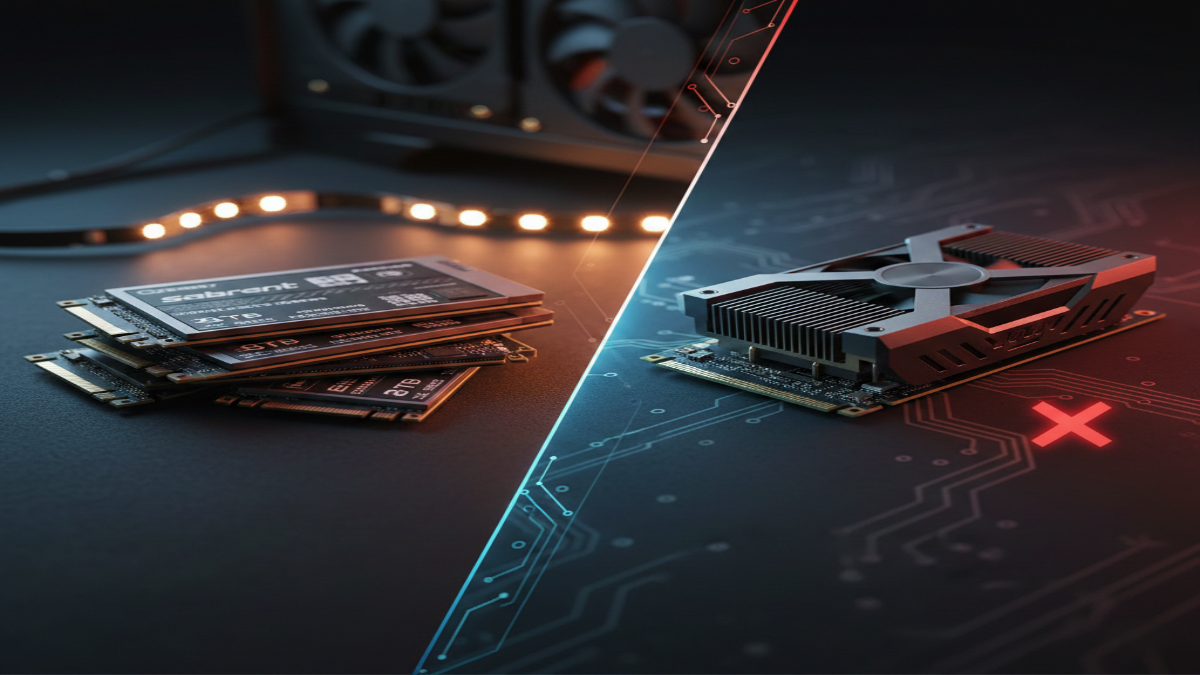
Browsing PC components lately? Marketing terms bombard you – phrases like “incredibly quick,” making last year’s gear seem ancient. Right now, NVMe storage moves data at rates once unthinkable, hitting multiple gigabytes every second. Meanwhile, fifth-generation models carry eye-watering costs. Excitement builds fast, pushing the idea that top-tier speed protects your system down the road. Yet reality hits differently – you probably don’t gain much by paying extra. For most people playing games or doing everyday tasks, raw numbers mislead. What truly counts isn’t how fast it reads – it’s how much fits inside.
Spending extra cash on gear you won’t fully tap into right away? That idea gets pushed hard by gadget makers. When it comes to storage, folks get wowed by sky-high transfer numbers slapped on packaging. Truth is, those figures pop up only under perfect lab conditions – rarely at your desk. Grabbing a smaller drive just because it claims faster tech might feel smart – until you run out of space fast. Pay the same amount, yet land twice or four times the room? The larger option wins most real-world uses hands down. Big speeds sound flashy – but actual file load gains tend to be tiny beyond a certain point anyway. So next time, weigh how much you truly need now instead of betting on later.
Truth is, storage space stays useful no matter how much time passes, yet speed improvements stop paying off after a certain stage. Five years on, one terabyte holds just as much data as it does right now, plus people keep finding ways to use every bit. Some tech fans still pick old-style spinning hard disks for backup machines or extra computer storage since cost per gig remains lower than anything else around. The same idea works when talking about solid state drives. That old PCIe 3.0 drive? It often costs much less per gig than the newest ones. While shopping during big promotions, prices drop further on last-gen models. Speed might be slightly behind, yet storage space jumps ahead by comparison.
It’s clear now – software keeps growing. Take a glance at what hit shelves in 2025. Games such as Battlefield 6 arrived with file sizes near 80GB. Meanwhile, Kingdom Come: Deliverance II required an even steeper 100GB just to install. On the lighter side, something like Clair Obscur: Expedition 33 still crosses over 50GB without slowing down. Storage space will vanish fast, while speed gains hardly register. It takes way longer to fill up on performance than it does to drown in files. Three extra seconds won’t trip you, but an overflowing drive sure will. Files grow like weeds; patience doesn’t stretch nearly as far.
Here comes compatibility to complicate things. Buying a drive with cutting-edge features won’t guarantee your system keeps up. Look at DirectStorage. It promised to change PC gaming forever – cutting out middlemen so the graphics card accesses the SSD straightaway, making load times almost vanish. Yet here we are, almost four years later, still watching slow uptake. Peek into Steam’s catalog and you’ll spot roughly seventy titles using it, no more. Support exists in some places, though outcomes often fall short. Take Monster Hunter Wilds – its release brought trouble, a flaw in how DirectStorage worked, dragging down gameplay until users removed certain files. That headache felt familiar. Spider-Man 2 on PC stumbled the same way.
Just because tech gets better does not mean old games get upgrades. When it comes to titles you already have, they stay frozen in time. Even with stronger hardware, real gains fall short of theory. Speed jumps look big on spec sheets, yet daily tasks feel barely different. Four times quicker sounds huge – until reality sets in. Booting up stays slow, loading screens linger. The truth? Other parts of your machine hold things back now. That shiny new drive often waits around, doing nothing. Progress hits walls beyond storage speed.
Sure, some cases stand out. When handling huge 8K raw footage as an editor or shooter, those faster rates might trim entire days off weekly tasks. For these roles only does velocity become useful gear. Most people though? They hand over more cash just to own a high-end feature they almost never tap.
A machine built to dominate half a decade from now? Impossible. Tech shifts too fast, paths unclear. Today’s fastest storage could mean nothing when 2028 arrives – new demands may need new designs. Chasing future-proof dreams often leads nowhere real. Focus on what comes next: two, maybe three years ahead. Within that window one truth holds steady – games swell in size. So does that pile of downloaded files piling up unseen. Instead of chasing top-tier speeds, pocket the difference by grabbing a larger storage option. A bigger drive means more games without extra cost later on. It just makes sense when you think about how often you’ll actually need blazing performance.
Disclaimer: The information provided in this article has been collected from publicly available sources on the Internet. Readers are requested to verify this information with available sources.