

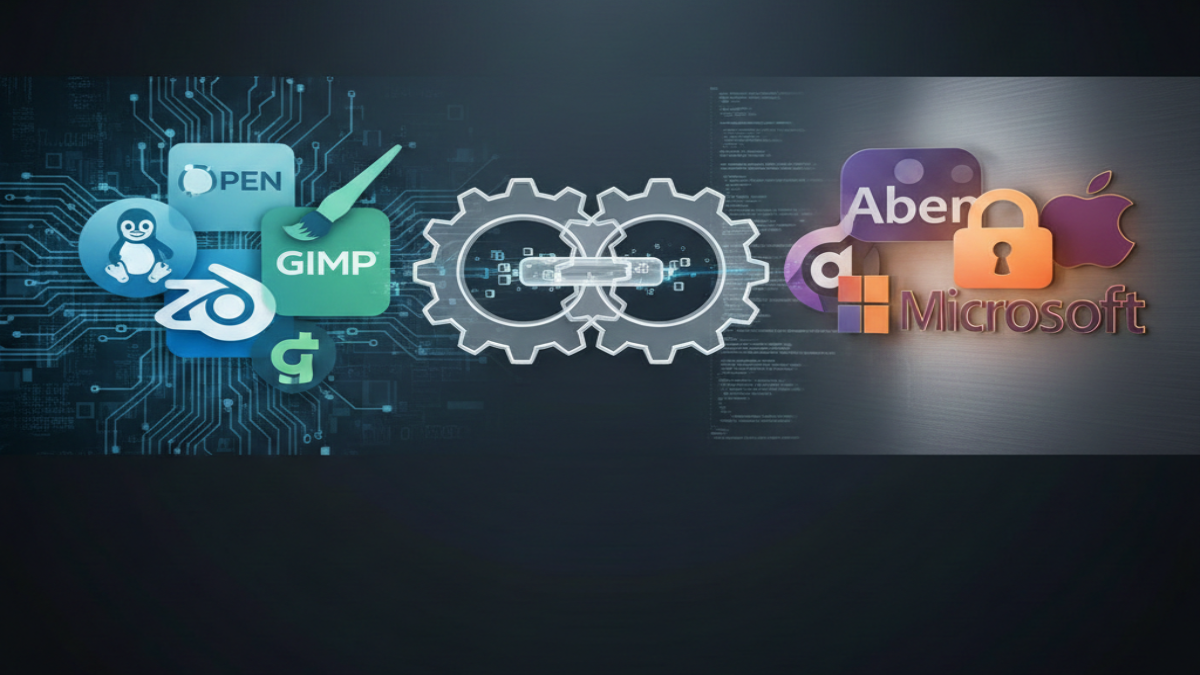
Out here, code runs everything. Paying big money feels normal when grabbing top tools – video editors, antivirus guards, fancy design programs – the kind with shocking prices. Yet a strange truth sits underneath these apps you trust: nearly all lean heavily on unpaid labor from people building open-source projects. Take that free layer away? Many crash hard. Others vanish before they start.
Back when computers first became common, programs were often built piece by piece. Most lines of code came straight out of one programmer’s mind, yet over time things changed – systems got heavier, users wanted more. Rebuilding everything anew began feeling pointless. Parts started snapping together like blocks. Need a ready-made tool? Pull it from a collection others helped shape. A few collections stay locked behind paywalls. But many sit wide open, free for anyone who knows how to look. Truth is, most apps you touch every day lean on open-source tools to manage the routine tasks. Because those building blocks exist, coders skip rebuilding the basics each time. They pour effort into what sets their product apart. That difference? It’s where value shows up for users.
Hard puzzles online usually hide in plain sight, mainly since big shared-code efforts quietly run them behind the scenes. Take network rules, strong encryption, sound and video formats, storage software, or shrinking file sizes. Each one leans on brilliant math and tangled programming few coders could rebuild solo, much less grasp completely. Even if a giant company tried assembling teams to make private copies, the gamble wouldn’t be worth it. When encryption fails or a database misbehaves, disaster follows – reputation crumbles fast. Open tools? They’ve survived real attacks, shaped by relentless scrutiny across years. Picture this: you didn’t write the base code yourself, yet thousands silently guard it alongside you. Strength spreads evenly now; no one begins behind anymore. The ground beneath every project feels firm, because so many hands already tightened its bones.
Pulling out your card for a custom app means skipping the charge for raw innovation or some fresh method of handling information. Rather, what you cover includes refinement – think clean layouts, help when things go sideways, plus promises they will keep running. What lands in front of you? A sleek outer shell resting firmly on tough open-source foundations. That swap works well enough, given plenty of free code comes from developers building stuff mainly for fellow programmers. They care more about making tools work than how shiny those tools look, so typical open-source interfaces resemble something cooked up back in the nineties. Out there, businesses turn raw tech into tools regular people can use without frustration. Goals shift depending on who’s building: one crowd obsesses over inner mechanics, the other shapes how it hits the senses
Most people miss the real power behind open source – it’s not the coding. What makes the difference? Licensing. Even if lines look the same as corporate work, copyleft changes everything through careful design. These rules wipe out confusion about usage rights across locations. Big firms stay far away without solid legal backing, worried lawsuits could strike or IP vanish overnight. It started back when Linus Torvalds said no – flat out – to upgrading Linux’s license from GPL-2.0 to GPL-3.0. That update aimed to stop companies making gadgets like streaming boxes from sealing them off tightly. Had the switch happened, firms building such gear would’ve walked away on the spot. Too much money at stake made it a nonstarter for them. Yet that old license? It quietly holds together two worlds: one where code flows free, another where profit still fits.
Open-source didn’t grow in opposition to business interests – it grew alongside them. Some assume conflict exists where there’s really cooperation. The truth? Companies wanted shared rules without drowning in paperwork, so free tools filled that gap. Think of it like how we use common signals to connect devices – same idea. Progress leans on both models working together, each playing its part. Next up, when you open an expensive new app, pause just once to notice the quiet, no-cost base letting it run. Not far behind each purchase click sits a whole universe of shared coding effort holding today’s internet together.
Disclaimer: The information provided in this article has been collected from publicly available sources on the Internet. Readers are requested to verify this information with available sources.