No products in the cart.
Current date
March 30, 2026

Beyond Big Tech: Why the Move to Proton Drive is a Privacy Necessity
 James BrownMarch 22, 20264 Mins read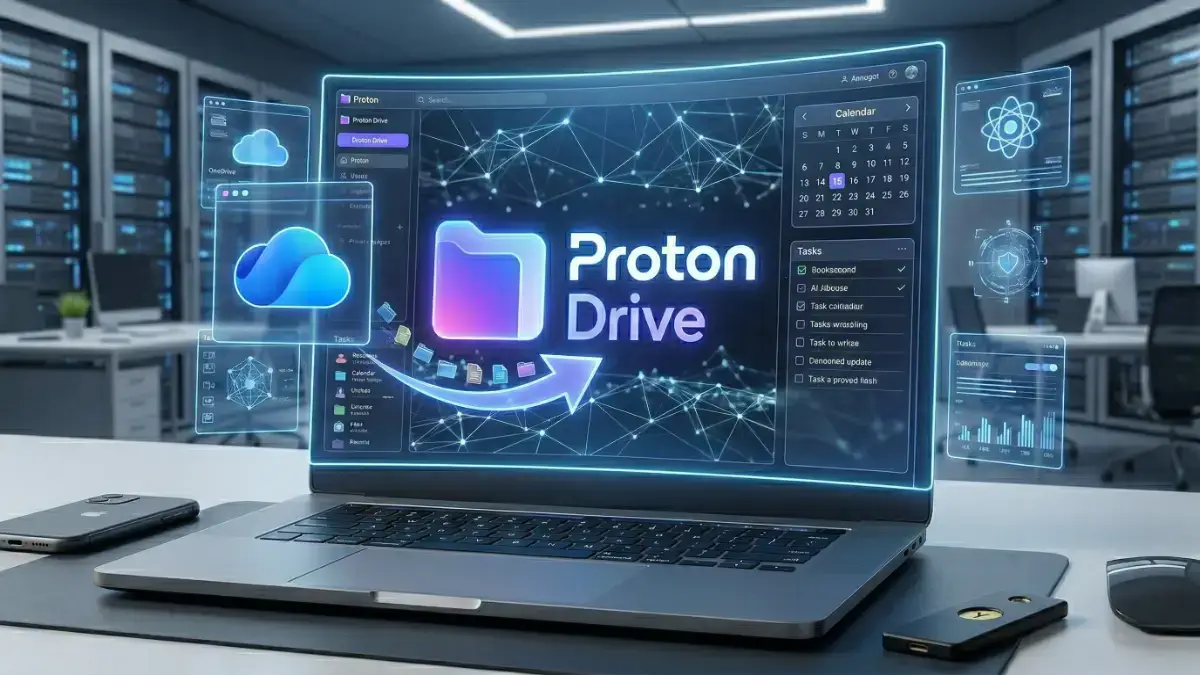
Share
URL copied
For years, the average consumer has been utilizing the idea of cloud storage like a digital attic – like somewhere antsy files can be tossed into without much concern for who happens to be poking through the boxes looking for something. Microsoft OneDrive, prepackaged into the billions of Windows machines, as well as baked into the omnipresent Office 365 suite has taken advantage of this simplicity and become the default norm for document synchronization. However, with the complexity of data-breaches increasing and the invasiveness of corporate data mining practices, there is a huge migration towards the zero knowledge equivalent, for example Proton Drive, in the technical community. This change is not just one of style or small changes in features, but is the fundamental re-evaluation of the digital sovereignty and the cryptographic boundaries we draw around our particular, personal information. Unlike the traditional providers that are focusing mostly on the seamless indexing and data accessibility of their own internal algorithms, Proton Drive is running on an architecture of privacy-by-default that fundamentally shifts the relationship between the user, their data and the service provider.
Also read:The Invisible Powerhouse: Why VLC is the Only Network Media Hub You Actually Need
The primary reason for pushing for this migration is the technical difference between encryption-at-rest and E2EE. While OneDrive does use encryption to store the data stored on the company’s servers, Microsoft has the cryptographic keys for standard personal accounts. This means that in theory (as well as, now, very practically), Microsoft has access to your files (if needed by means of government subpoenas, and scanning purposes). Proton Drive remove this vulnerability of vulnerability, by have a client side encryption. In this model, files will be encrypted in the user’s device even before files even reach the cloud. Because the decryption keys are never transmitted outside the user’s hardware, the contents of the files also can’t be seen by Proton itself even if that was legally required to do so. This zero-knowledge framework is brought to a metadata level as well for example file names and folder structures, which are often ignored, but sometimes can disclose important patterns about a user’s professional and private life.
Also read:Optimizing Digital Redundancy: Why FreeFileSync Remains a Power User Essential
Beyond the technical problems of encryption, a service provider’s geographical and legal jurisdiction play an enormous role in data security. OneDrive is a product of a United States based corporation and so is subject to the CLOUD Act as well as various frameworks for surveillance that allow for broad data seizure. In comparison, Proton is based out of Switzerland which have some of the best privacy laws in the world. Swiss law has a high evidentiary bar when it comes to any request for data, and even in the event of valid court order to do so, Proton’s infrastructure ensures that the data being provided is an unreadable ciphertext. For those working professionals that deal with sensitive intellectual property, or those living under a structured and oppressive regime, this advantage of jurisdiction isn’t just a feature that tech giants native to the US get to take for granted – it’s one of the most important advantages and can mean the difference between life and death.
Also read:Microsoft Refines Windows 11 With Long-Awaited UI Fixes
Another tenet of the argument for Proton Drive is the transparency that open source software means. While we cannot see the inner workings of the synchronization engine of OneDrive because it is proprietary and inaccessible to the public, Proton often releases its source code for the software for public security auditing. This “trust but verify” approach allows the global security community to look through the codes for backdoors, vulnerabilities or errors in the implementation. In an age where the sort of “shadow updates” that can silently change the privacy settings on mainstream applications exist, the option of confirming something like that a service is what it says it is not something to be taken for granted. Furthermore, the Proton Drive integration with a much larger ecosystem of privacy tools designed around privacy, such as Proton Mail, Calendar, and VPN is organic in building a total environment when it comes to digital data privacy, and the integration of data between the different silos is minimal to zero. Moving from OneDrive to Proton Drive can provide the final step in the de-googling or de-microsofting of one’s digital life, and in removing a surveillance-heavy ecosystem in favour of one predicated upon cryptographic mathematics.
Also read:Why This New WebKit Browser is the Holy Grail for Power Users and Privacy Seekers
The perceived friction to switching cloud providers has been Microsoft’s greatest retention tool for a long time, but the technological difference in user experience is rapidly closing. Proton Drive has changed itself from the simple web interface to be a complex platform with dedicated sync clients for Windows and macOS and feature-rich mobile applications. These tools give the same “on-demand” file access that the users have become accustomed to, when they need the files to be downloaded they will only be downloaded to conserve the disk space on the local machine, all while maintaining the E2EE wrapper. While OneDrive could provide greater real-time collaboration of documents for editing, what you are gaining in return is complete mass exposure of such data to AI training models and indexing bots Microsoft that are always available for AI training. For those for whom data integrity is more important than authoring a spreadsheet and then co-authoring it in a browser, the move to a zero-knowledge provider is the only logical choice. As we enter into the more buried data controlled age, using to choose a provider that looks at your data as a liability that they need to protect, rather than as an asset for them to profit from, is the ultimate in technical upgrades.
Disclaimer: The information provided in this article has been collected from publicly available sources on the Internet. Readers are requested to verify this information with available sources.
Author


Linux James BrownMarch 17, 2026
Creative Pros Rejoice: This New Shortcut Brings Affinity v3 Straight to Your Ubuntu Desktop
For years now the “Linux year of the desktop” has been more or less of a running joke in the tech community,...
James BrownMarch 17, 2026
LinuxJames BrownMarch 14, 2026
Your Raspberry Pi Is Getting The One Upgrade You Have Been Waiting For
For ages, Google Chrome has been the go-to browser for Linux community as a stable and featured browser for users with traditional...
James BrownMarch 14, 2026
LinuxJames BrownFebruary 17, 2026
Your Linux Desktop Just Got a Massive Power-Up: Everything New in KDE Plasma 6.6
If you have spent any time in the Linux world, you know that KDE Plasma is often hailed as the gold standard...
James BrownFebruary 17, 2026
Related ArticlesJames BrownMarch 21, 2026
James BrownMarch 17, 2026
DivyanshuFebruary 5, 2026
DivyanshuFebruary 5, 2026

The Invisible Powerhouse: Why VLC is the Only Network Media Hub You Actually Need
While most people think of VLC Media Player as the digital safety...
James BrownMarch 21, 2026

Why This New WebKit Browser is the Holy Grail for Power Users and Privacy Seekers
For years, choosing a web browser has felt like a series of...
James BrownMarch 17, 2026

Stop Wasting Your Money: Why You Seriously Don’t Need a Flagship TV Anymore
There was a time, not all that long ago, when buying a...
 DivyanshuFebruary 5, 2026
Stop Paying for Subscriptions: This One Open-Source Tool Just Killed Four of My Monthly Bills
That moment hits everyone. You’re checking your credit card bill, confused by...
DivyanshuFebruary 5, 2026