

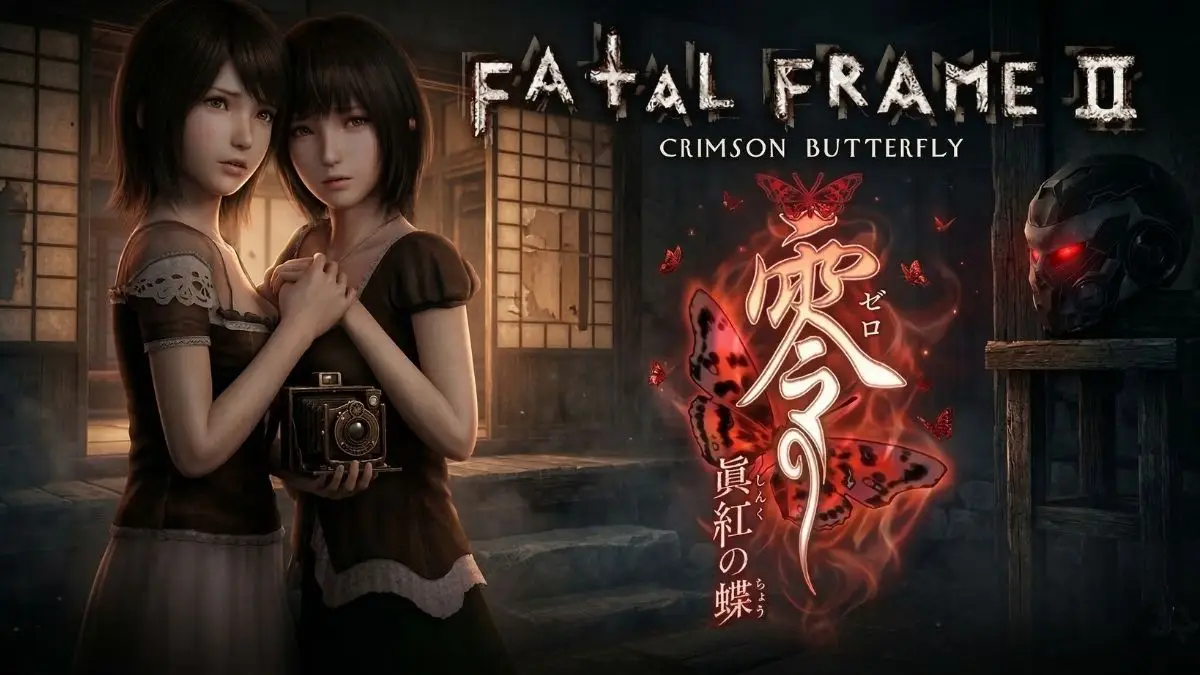
The golden age of survival horror is defined by titles that are famous to everyone. Yet, if you ask a hardcore fan which game has kept them awake at night, one game always comes up in the answer. Released in 2003, Fatal Frame 2: Crimson Butterfly was in no way content to compete with the big boys of the era; it staked out a different, frightening niche that continues to feel unmatched a decade later. While other game relied on the gore of zombies or the foggy town psychosis, this masterpiece trusted a much more intimate fear, that of the ever-present feeling of being watched by an enemy that cannot be overcome with bullets. With a modern remake in the works, now is the perfect time to realize why this entry in the franchise is a must-see for anyone who loves a good scare. The revival about to take place is not just a nostalgia trip for those who grew up in the days and nights fighting games in dark basements; it is an opportunity for a new crop of people to see how tension and atmosphere can be the weapons themselves.
Also read:Why Your Windows Task Manager Is Secretly Tricking You Every Day
The game is based on the tragic and immensely emotional story of twin sisters Mio and Mayu Amakura. After chasing a mysterious crimson butterfly into the woods they find themselves lost in “Lost Village” a lost place erased from maps that languishes in a cycle of eternal ghostly torment. What makes this story unique in the world is the way it ages us with stereotypical issues that we all have, and these issues can be unspoken fears and feelings such as, being abandoned, are kinship bonds, and anxiety of this tradition weight that crushes us into our souls. The narrative is not rushed to provide answers instead allowing dread to seep through found notes, environmental story telling and Mayu’s increasingly erratic behavior. This slow burn pays off patience and makes us feel vulnerable that is often lacking from high action titles. By placing the action at a younger age group (two young girls with no combat experience) the game eliminates the “power fantasy” and the players are genuinely exposed to the supernatural forces of Minakami Village.
Also read:This Professional Design Secret That Costs Zero Dollars and Rivals Industry Giants
Of course, you can’t speak of this series without a mention of the most well known of all of its innovations, the Camera Obscura. In an industry where most problems are resolved using a shotgun or a lead pipe, Fatal Frame II requires you to do the unthinkable – stand perfectly still and look right at the monster. The Camera Obscura is a magic contraption that allows the user to see and exorcise spirits by taking their picture. It is a brilliant reverse of normal gameplay mechanics. To do maximum damage, you have to await a “Shutter Chance” or a “Fatal Frame” which could usually come after a vengeful spirit lunged at you. This makes this a high-stake game of chicken play wherein the player is prompted to let the horror get as close as possible. Every encounter is a frantic exercise in timespan and factors of nerves, this simple reaction of looking at something through a view finder becomes quite one of the most stressful experiences in gaming. A modern remake could make these moments something truly breathtaking, and accomplish this with haptic feedback and spatial audio to make the presence of the ghost feel right behind the player’s shoulder.
Also read:This Professional Design Secret That Costs Zero Dollars and Rivals Industry Giants
The atmosphere of Minakami Village is a character unto itself and it is here that the remake could really shine on current generation hardware. The original game was a technical gem for the PlayStation 2 and made quite clever use of the lighting and interiors to obscure some of the limitations of the system. Imagine every one of those gasping shitfalls in the Japanese houses with real volumetric fog, dynamic shadows falling across shoji screens, and 4K textures bringing out all the gruesome minutiae of the ghosts’ designs. The sound design, which is already fabled for its whispers and creaking floorboards, could be turned up to make the village feel truly alive – or rather, truly dead. The cultural aesthetics, based on the folklore of Japanese culture and ritualistic horror, have a particular flavor that is unique compared to the Western-centric horror genre we are used to seeing. It offers an eerie beauty which is fascinating and repugnant, so that even the quietest moment is filled with a clogging sensation of fear.
Also read:Your Android Phone Is Secretly Stealing Your Storage—How To Reclaim Every Gigabyte Now
We are seeing a renaissance of survival horror remakes, such as Resident Evil and Dead Space that demonstrate a huge appetite across the globe for old-school scares reimagined with modern technology. Fatal Frame II: Crimson Butterfly is the sensible continuation of this trend. It still stands as a cult classic because of its willingness to take a risk to be off-beat, to a weird parallel of stillness instead of explosive set pieces. For those that missed it the first time around, the remake is the ultimate entry point into a series that always marched to its own drum. It reminds us that the unknown is sometimes scarier than what we can clearly see, and that sometimes it is just a simple camera that stands between us and the abyss. As we wait to step back into the darkness of Lost Village, one thing is certain though, and that’s that the crimson butterflies are going to be calling again, and this time, there would be nowhere to hide from the lens.
Disclaimer: The information provided in this article has been collected from publicly available sources on the Internet. Readers are requested to verify this information with available sources.