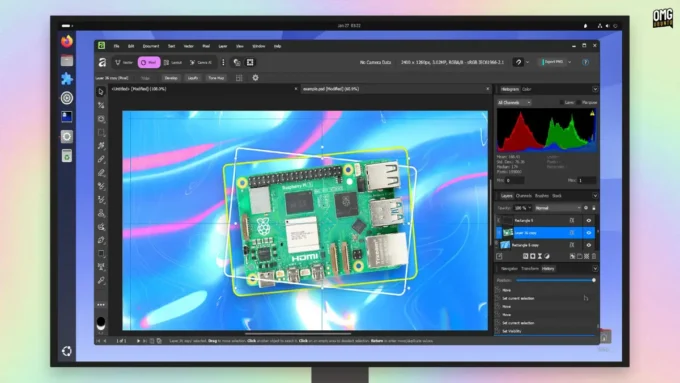

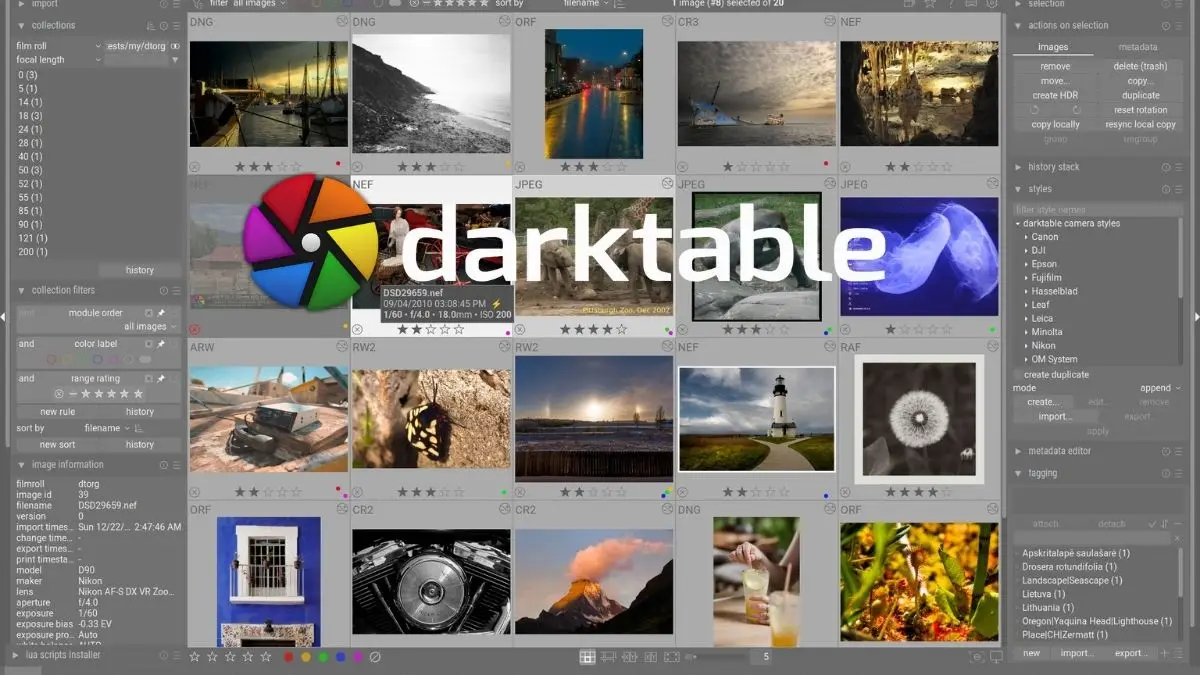

Assuming you have been silently forking over cash to Adobe in the tune of 120 or so annually to keep your photo editing workflow alive, you may choose to take this one seat. A totally free, open-source program exists in the market named Darktable that silently does all Lightroom does and in most other cases does it better. No subscription. No cloud dependency. No company strategy that can transform overnight. Raw and mighty photo editing software bang on the hard disk, just waiting to give your work with your images a new entirely new look. And frankly, after trying it, you are going to find it much more difficult than you assume to revert the payments to Lightroom.
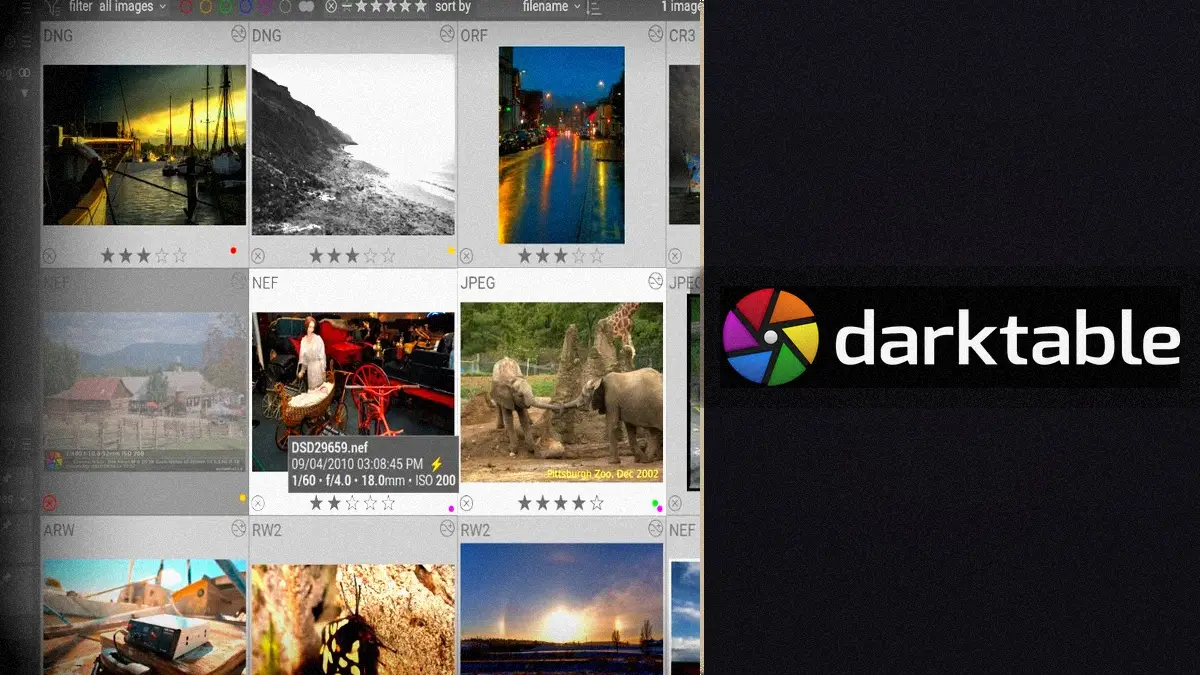
So what exactly is Darktable? Essentially, it is a non-destructive RAW photo editor, which is written and released on open-source software. That is to say that all the individual adjustments that you do on your photos will be stored in a little man readable XMP sidecar file that is beside your original RAW image. Nothing gets buried somewhere within some bloated proprietary database that Adobe software can decipher. Should you choose to migrate all your photo library onto a new hard disk, change the entire editing software five years later, or even simply want to view your edits on any computer, your data is at the ready. Neat, tidy and completely available. Such future-proofing is something you just do not get when you are bound into an ecosystem that is constructed based on the business model of another party.
The actual magic with Darktable however, is the processing of the RAW files. The instant you drop into a photo editor, most photo editors attempt to make your picture look pretty by subtly applying preset curves and adjustments in the background. Darktable tosses that play book in the fire. It displays the very raw and two-dimensional data of what you took with your camera. Practically, what that entails is that you are able to extend your exposure exposures much deeper and that you are able to retract blown-out highlights and that you can extract insane details lurking within deep shadows without your image breaking down or your image becoming ugly with broken digital bands creeping in. This alone is worth switching to anyone who has ever been annoyingly at the hand of an editor who silently destroys a shot that would otherwise have been salvaged.
So, in case you have ever been impressed with the masking features of Lightroom, then you will be making your jaw drop a bit. The masking system of Darktable is another monster. You can instruct it to use an effect on pixels matching a very specific color that are within a shape you have drawn by yourself. Such accuracy allows performing surgical modifications on one aspect of a photograph without moving anything. It is that type of granular control that the majority of mainstream editors do not give out freely unless you shell out more money on it. To add to this, Darktable also includes the extras such as tethered shooting and an in-built map module, features normally found in the higher price bracket elsewhere.
At this point, however, should you have been impressed with the masking tools of Lightroom, you will have your mouth open rather wide. The masking system in Darktable is of a different order. You can tell it to put an effect on the pixels that are matching very specific color and are contained within a shape that you have drawn. Such kind of accuracy implies that you can engage the surgical corrections of one aspect of a picture without having to touch any other aspects. It is the type of granular control that most mainstream editors do not even provide you with unless you pay them additional money. And to make it even better, Darktable includes such functions as tethered shooting and an integrated map module, which are normally associated with a high price tag in other applications.
The fear that open-source software will turn out to be slow or cumbersome in comparison with the big-name apps is one of the factors that prevent many people even trying to use open-source software. Darktable helps eliminate that fear relatively quickly. As soon as you overcome the initial learning curve, its automation system comes in and makes total difference in your editing speed. Styles in Darktable are not merely presets of few positions of sliders stored. They are complete piles of editing modules stored as a unit package. It implies that you can construct a style that combines all the elements of your favorite film-grain effect, to a sophisticated sky-recovery masking system, and use the entire creation with a single mouse-click. Regular users of Darktable have constructed whole collections of their own custom styles depending on the particular lighting circumstances such as golden hour shots, gray days, or indoor studio work. With the correct styles a photo ninety percent of the way to final in seconds is not a fantasy. And that is where the thing most people neglect entirely is that Darktable community is very dynamic. As the software is open source, the programmers and photographers worldwide are continually updating it and adding new features depending on what the literally users need. It is not up to some large tech company to determine what is next. That way, whether you have been debating the idea of dropping your subscription to Adobe, Darktable is something worth downloading and spending an afternoon with. Free does not necessarily mean inferior.
Disclaimer: The information provided in this article has been collected from publicly available sources on the Internet. Readers are requested to verify this information with available sources.
Author

Review Overview
Summary
Vestibulum viverra gravida fringilla. Suspendisse accumsan purus quis augue lobortis quis sagittis
The Pros
Colors Size StyleThe Cons
Expensive Duration quality- Design2
- Speed2.5
- Saving4.5
- Features3