

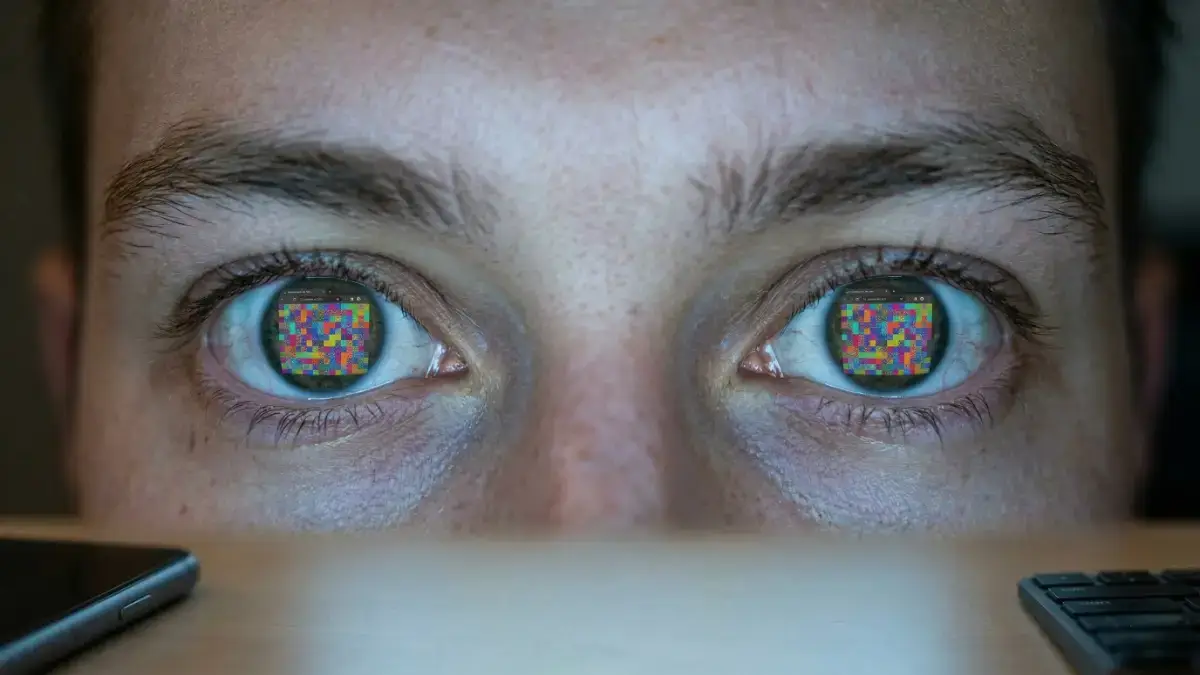
The world of digital displays be some kind of persistent arms race of one side nits contrast ratios colorheart gamut the other. However, the most important hardware is that on average it is your skull. We tend to think of the red on a smartphone as the same as the red on an expensive laptop, of course, and to feel that our eyes register all the fine variations in the color. A new software developer called Keith Cirkel has created a new type of challenge played by web, that requires putting your eye and monitor to the test. Titled, “Your DE(OK) JND?” “Just Noticeable Difference” (JND) is the task that this minimumist tool accomplishes, in the present modern Oklab color space. It is used as a digital vision check and stress test to your screen’s calibration and the results saves tech geeks bragging rights round the globe.
Read also:Your Raspberry Pi Is Getting The One Upgrade You Have Been Waiting For
The premise of the game is very simple: you see the block of color which is actually split into two slightly different shades. Your thing to do is to see the invisible line where the shade of one ends and the shade of the other starts, you click or hit on that exact corner. About 40 rounds and degrees the differences between the shades is down to next to microscopic so you have to squint at the screen to catch shades that the majority cannot. By the end, the tool makes use of a measure called Delta-E, a standard one in imaging science for measuring the differences in colors. In Oklab, the small the number, the more sensitive you are: you are able to tell characteristics between shades which would be considered as identical for most people.
Read also:AYANEO Pocket DS Secretly Taking Screenshots and Using Massive Data? The Truth Revealed
While this is billed as a test of human biological capability, the game is a brutal test of the quality of hardware as well. Most vision healthy persons end up scoring close to .02 with Oklab. Your equipment however has huge impact. An oldish budget laptop with a TN screen or a low-rank LCD phone will be hit to reach a “color wall” since the hardware that they have doesn’t meet the typical to encounter the fine variance that they require. A factory calibrated OLED panel or a professional creative monitor, can try to get closer scores, then it may have three or four decimals places. Environmental factors are important as well; sometimes many users would find that if they set the brightness to max they will be able to see the boundaries in different parts of their field that are hidden in shadows providing evidence that seeing conditions are indeed as critical as optics.
Read also:This Legend of Japanese Horror is Finally Returning to Haunt Your Nightmares
Keith Cirkel didn’t design this as a viral game; he as offering an answer to a practical problem that he had in his web development.” While as part of a CSS color minifier, a tool to reduce code required to display colors on a web site, he thought of the usefulness of how precise the human eye actually needs to see color. In the case of web code a color can be broken down into dozens of decimals oklch(0.659432 0.304219 234.75238). Cirkel’s experiments proved that extreme precision was a waste of space. He reasoned that for most of the real-life applications, three decimal places is more than enough in Oklab and Oklch – and less points are ok for formats such as Lab or Lch, which are old. This test proves that there are extra data points which waste bytes as neither eye nor most consumer screens are able to see that tiny of a difference.
Read also:Why Your Windows Task Manager Is Secretly Tricking You Every Day
The test has been revealing in terms of showing surprising consistancy and variability between flagship devices. People who tested early models of the iPhone 15 found the OLED screen had an impressive score of 0.0051, with the 2024 MacBook Pro OLED using the Liquid Retina XDR display coming in 2nd place with a score of 0.0058. These numbers show that high-end screens are close in performance, but the way that a panel manages in regards to light and color mapping lead to differences. After playing 40 rounds website generates your own url with encoding your score. Users post it to social-media locations or send it to their friends and it becomes a veritable epidemic of competitive “color-shaming” amongst tech circles. OLED smartphones vs onion gaming matte displays in 140fps makes people wonder which is the best of the best glass to the digital world.
Read also:Windows 11 Is Finally Fixing the Absolute Worst Thing About Your Printer
Beyond the competition, just looking at the blog post that Cirkel includes, covering explaining the science behind the calculation and mapping of colors for web browsers, it’s quite deep. He points out that the game results in higher JND scores than the real world, where we can hardly look at a static display on the pathway ‘seeking out invigilance between two shades of teal’. Our brains actually read motion and contrast, in contrast to little changes in hues microscopically. Nonetheless, those who design, photograph, or prefer simply fooling with hardware find the tool useful for getting objective input as to the limitations on their set-up. It is a reminder that ‘color accuracy’ is an entire spectrum no matter if you work in professional editing or happen to be a casual gamer there is always a ceiling to what you can – and your tech will notice – in terms of accessing.
Disclaimer: The information provided in this article has been collected from publicly available sources on the Internet. Readers are requested to verify this information with available sources.