

If you find yourself spending your days in front of a terminal, you already know of the code version handler Git which is your best friend as well as your biggest source of frustration. While command line is incredibly powerful, there are times when some task is just so laborious at times when you are what you do: typing the same strings over and over and over again. We have all been their on trying to find that one specific changed three weeks ago but then getting lost on the middle of a sea of scrolling text and cryptic hashes of text. Most developers often reach a point of digression due to the need of choice between bare-fastness of terminal or legibility of Graphical User Interface. But what if you did not have to.But what if you didn’t have to choose? There is a small and light tool that transforms out to be a real game changer if everyone who wants to move through their project’s past, without moving one single bird of a mouse.
This Professional Design Secret That Costs Zero Dollars and Rivals Industry Giants
For the purists that live in the command line, or Terminal User Interfaces, or TUIs would be the perfect middle ground. They provide the visual organisation of a regular app with out having to be away from in which you’re working While Git-specific TUIs used to be a bits of a rarity one particular project known as Lazygit has been making waves in seeing like history inspection is a breeze. It’s designed for people that find git log typing thousands and thousands of times a year to be pain in their production and acquisition of new products. By converting rounded off, long winded instructions of your SQLs into easy memorable and hit/miss keystrokes, it is easier for you to relate with the time line of your code; from branch browsing your code to going through massive commit histories.
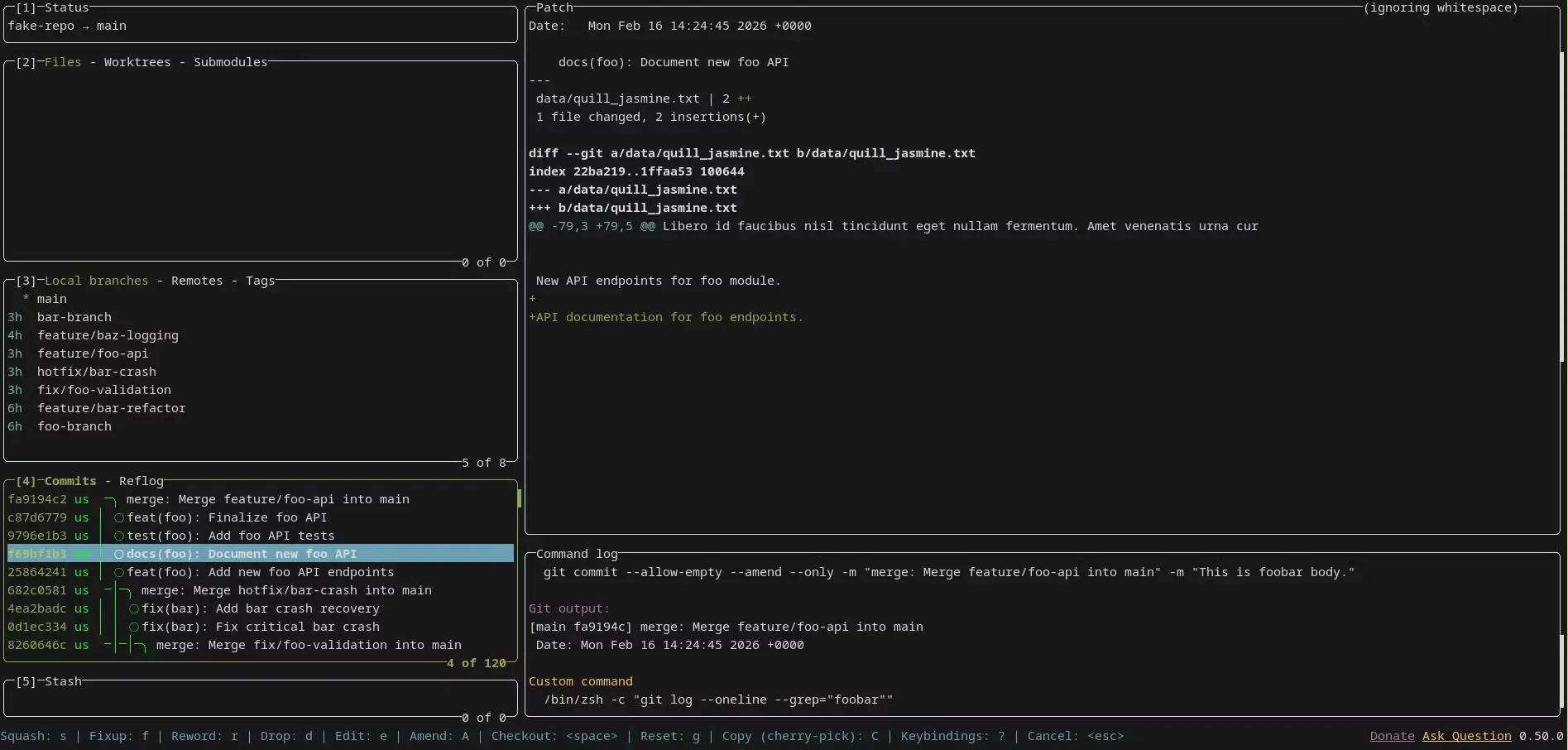
One of the most immediately obvious advantages to be had by using a tool like this one is the diffs. Usually, when you need to look at what changed in previous version you are in unpleasant situation of manually write git diff; or try to remember how exactly how much commits back HEAD~5 is. With Lazygit that friction is eliminated totally. You can move through your history using the normal Vim movement i.e. J, K keys and immediately check the changes. As you select committ you have a special preview pane which tells you exactly is what has been changed. If you are forced to scroll through such a long file, it is easy to move and use the direction keys to get deep into the code without losing your way in the middle of the list.
Your Android Phone Is Secretly Stealing Your Storage—How To Reclaim Every Gigabyte Now
But the real magic happens when you have to make comparisons of some points in time. In the case of a GUI it is more traditional to represent the concept of potentially changing a range through dragging. There on the terminal that usually require reconfigured command every single time you wish to change your perspective. This tool has a “range select” feature where you can hit a shortcut on one commit and you can move your cursor and up or down. As you are moving the diffs start being in the preview window which can give you a real time picture of how is the code evolving over some time span. This type of probing of the fluid takes milliseconds, as opposed to the seconds that it takes to stop and think, then type a new command.
Also read:AYANEO Pocket DS Secretly Taking Screenshots and Using Massive Data? The Truth Revealed
But now peoples go bary just looking at just lines of code and i think the reason why that’s important is that its important to understand the “shape” of your project. Branching is also such a fundamental part of the Git experience, that it is not rare to bring up a confusing mess of features merging and feature branches in the standard git log –graph command. Lazygit does this by providing a clean visualisation by autotomy which is designed right out of the box. It makes use of a clean set of fleshy looking lines and circles to represent your commit structure: it is obvious at a glance, exactly from whence a branch started and ended up. By default, it helps you to keep things tidy by showing branches which can be reached from your current position but a simple toggle shout up every single branch in the repository.
The improvements in the workflow doesn’t end with people just looking at things either. If your team prefers to rebase feature branches or, if you are a squashing commits fanatic to squash commits away in a clean main branch, there are some intuitive keymaps into the interface to help you to do so. Instead of having to type in commands manually on the off-chance that you remember to not miss one commit hash you can instead just select the blocks you need in the history panel and basically let the tool do the enormous lifting for you. It has that kind of user experience that you expect to get with a nice IDE without the overbearing bloat of an IDE.
Of course, no matter just how good the visuals are, in the case of a tool, a tool is just as good as a search. While command line technically is king about searching, in the context of some requires it is like over-kill. If it is that just you need to look for a particular commit message, nevertheless, you can press the forward slash key, and commencing typing. It’s this very quick and catch up everything that you currently see your history. While it may not compete with a complex search with Grep to find specific snippets inside the body of a commit, it does 90% of the lookups that are done on a daily basis with zero effort. All those encourage to those moments when you do need all the powers from the ole CLI but go dropping down to those build in command line or hop back to your shell in a hether.
Filtering is also another area that is harmful with this tool. With the history we’ve all been through changing work hundreds of times for no reason. If, however, you just want to know what has gone on with a particular file, or what some particular author has been up to, you can bring the filter menu up with the quickest of short cuts. In this manner helps you to immediately to strip the noise, and just to focus on one path/person which is important. This ability to slice and dice the history on the fly make it much easier to track down when some bug was introduced or who to talk to IF you are having some problem with a certain module.
It is worth mentioning, that notwithstanding it all emphasises here is placed on how to traverse history, in fact, that is full featured git client. It has color coded indicators to tell you your local and remote status to let you know at all times whether or not you are ahead of that server or behind. It also supports granular staging, i.e. you can select particular lines of code to commit and not the entire file and cherry picking, reordering commits and even deleting commits. It is in essence taking all of the “scary” or “annoying” aspects of Git and turns it to a bunch of safe, visual nebulosity items.
Lazygit may or may not be a perfect fit for every single edge case, but, for the vast majority of people who are developers, it is a way to interact with a very technical system in a much more human way. It is respectful of the speed of the terminal besides the fact that our brains are extremely more adept at crunching visual data than long strings of text. Whether your range is of the dozens of branches or you are trying just to understand why some particular function was updated the last Tuesday, this tool encompasses the process making it seem natural. If you are tired of the “labor” of Git, you’ve got well worth heading on over to their repository, and giving it a spin. It is one of those rare utility which after You added to your work flow you will think to your self how do I get over this thing how can I ever do without (or may not use) it anymore.
Disclaimer: The information provided in this article has been collected from publicly available sources on the Internet. Readers are requested to verify this information with available sources.