

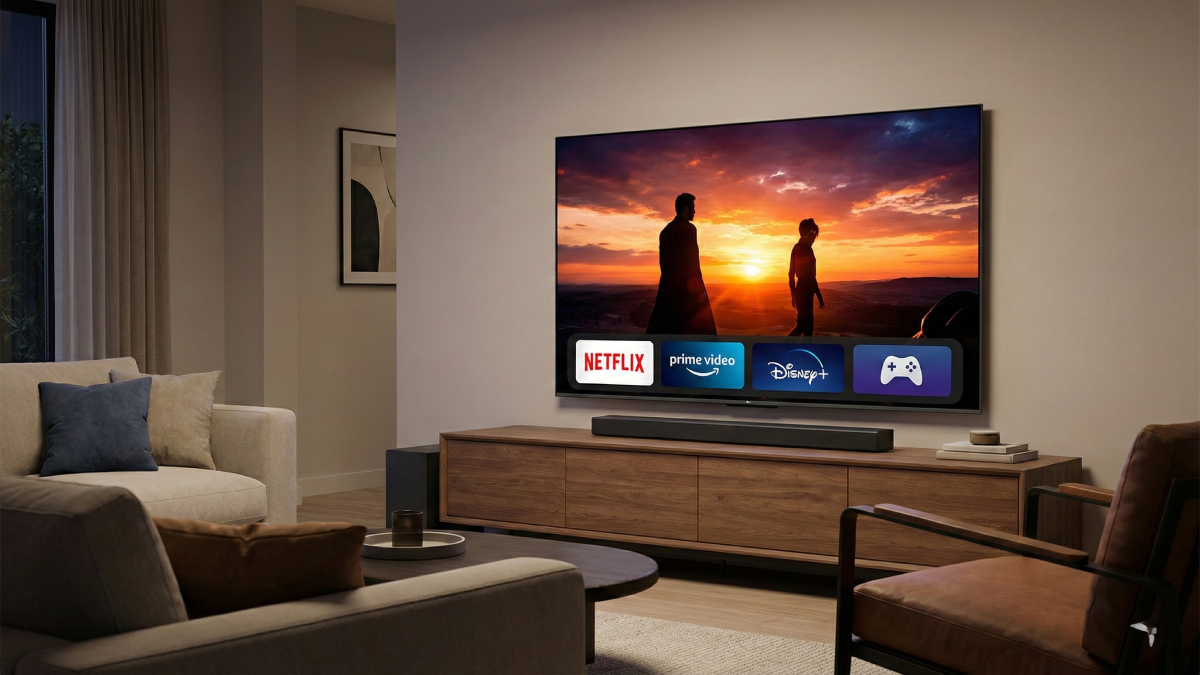
Once upon a time, not too long ago, purchasing a television set wasn’t a complicated exercise – but it was certainly more costly. The only way to get a true picture that wasn’t the equivalent of looking through the end of a socks was to shell out serious amounts of money and purchase a high-end flagship television. These were the showpieces of the living room and the largest screens and most cutting-edge technologies available on the market. In those days, if you opted for a cheaper, middle of the range television set, you were really getting ripped off. That’s because you typically ended up with a TV that was dark, blowy and presented awful viewing angles. It was a typical case of “you get what you pay for”, and for many, this “good” was simply too expensive. Jump ahead to the present, however, and the game has changed so much that pretty much anything goes when it comes to buying a new television. We are at the point of diminishing returns where you simply do not notice the difference between a mid-range TV that costs $700 and a high-end TV that costs $2,500.
Also read:You’re Using VLC All Wrong: 7 Secret Features That Will Change Everything
The biggest difference is the way good features have found their way into entry-level sets. Once considered premium features, like local dimming and high-peak brightness, are now considered mainstay features in mid-range sets. This feature convergence has resulted in 4K resolution and true HDR support being no longer considered premium features. One of the key developments that contributed to this paradigm shift is Mini-LED TVs. Through a much-improved pixel resolution of the backlight and much larger dimming zones, mid-range TVs can now deliver fantastic contrast ratios. Once, mid-range TV sets suffered from “blooming” – light spilling from a bright source into the black areas of the screen, making the black appear more like dark gray. Mid-range sets with current Mini-LED technology have essentially eliminated this problem, bringing an image with a level of detail that was once reserved for premium OLEDs or high-end LEIDs.
Also read:The Invisible Powerhouse: Why VLC is the Only Network Media Hub You Actually Need
The same thing is happening with HDR. Whereas basic HDR was a marketing smoke-and-mirrors technique across lower-end TVs that didn’t have the dynamic range to support what they claimed on the box, mid-range supports it with aplomb. Dynamic HDR types, like Dolby Vision and HDR10+, which automatically vary the brightness and contrast scene-to-scene or even frame-by-frame, are now mainstream outside of the most expensive sets. This is a huge plus for the consumer as static HDR can often be too dark or washed out, depending on the TV quality if not being processed by the very best chips. Thanks to dynamic HDR, you don’t have to spend money on a TV as expensive as a teenagers’ first car to get a picture that’s consistent and bright throughout. You experience the “wow” effect that makes biting the bullet and going 4K worthwhile.
If you are a gamer, it gets even better. The other reason to upgrade to TVs on the high end were features such as low input lag and high refresh rates. This is no longer the case. “Game Mode” is now an essential mid-range feature. I play enough games to know that this is the single most important feature, aside from screen size. It accomplishes this by switching off incidental, unnecessary processing of the image which can delay the time between when a button is pressed and the game is affected. With it gone, a gorgeous image can seem lethargic. Nowadays, you can buy a mid-tier TV and get technologies such as Variable Refresh Rate (VRR) and Auto Low Latency Mode (ALLM) to deliver the best possible experience with new game consoles, all without paying the “lagest flagship price.”
And size has become a great equalizer. Once upon a time, you had to spend the big bucks to own a room-filling 75-inch or 85-inch TV. But these days, oversized screens have become very affordable, which diffuses the value proposition. Unless you are a real audiophile, for most of us the visual effect of a bigger screen adds more “wow” to a presentation than the small improvements in colour and contrast available on a smaller, but more expensive, flagship. In reality, the healthy option now is to consider the size that works for your space and then put your extra money into the few items of value that play an important role in actual use, like imagescaling and sound quality, instead of aftermarket measurement for measurement’s sake.
So, what about that $2,000 plus flagship? There are more reasons than ever, but they are getting rarer. The first is better image processing (upscaling). This is when the TV’s processor, or “smarts”, tidies up or optimises the picture to give it more clarity when viewed on the 4K TV’s sharper screen. If you’re watching a lot of older content or lower-resolution broadcasts on standard definition cable, a flagship set’s image processor will be better at cleaning up the digital artefacts and sharpening material. Flagships sets also tend to perform better in very bright living rooms due to better anti-reflective coating and superior sustained peak brightness. They also typically have a larger viewing angle, which is crucial if you have a family of five or have the TV in a less-than-ideal viewing position.
In any case, the mid-range is there because it offers 90% of the TV performance that people care about without dramatically increasing the cost of the TV by 100%. When you put down the TV remote on a Tuesday and fire up a new episode of a TV show on Netflix or play a couple of rounds of a shoot-em-up game, you are not going to be looking for slight light bleed around a corner of the image or checking if a specific target nits/unit of brightness is being met. You want something with a decent brightness, clarity and responsiveness, and that is what you get from our mid-range TVs. The advances seen in high-end TVs have become niche and often require a carefully constructed darkened home environment to benefit. For the remainder of the population, who reside in and have a normal amount of light in their normal homes, mid-range TVs just makes more sense, not to mention their superior visual advantages.
Disclaimer: The information provided in this article has been collected from publicly available sources on the Internet. Readers are requested to verify this information with available sources.